
Register your office to receive a $50 credit towards your first case.

China Top Ad Plasma Biomarkers Suppliers?

China’s plasma biomarker sector is gaining attention as Alzheimer’s disease research moves toward earlier, less invasive assessment. The World Health Organization reports that more than 55 million people live with dementia worldwide, with nearly 10 million new cases each year. This growing burden is increasing demand for reliable Ad Plasma Biomarkers, especially plasma p-tau217, p-tau181, amyloid-beta 42/40, neurofilament light, and GFAP.

Chinese suppliers now support hospitals, CROs, universities, and pharmaceutical trials with ELISA kits, chemiluminescent platforms, and ultrasensitive digital immunoassays. The 2024 Alzheimer’s Association Facts and Figures report highlights rapid progress in blood-based biomarkers, while recent NIA-AA research frameworks emphasize biological evidence over symptoms alone. These developments make analytical sensitivity, clinical validation, and sample stability central purchasing criteria.

Quality differences remain significant. A polished product page is not enough. Buyers should examine ISO 13485 certification, NMPA status where applicable, lot-to-lot precision, matrix validation, reference materials, and peer-reviewed performance data. Suppliers with documented limits of detection and blinded clinical testing deserve closer consideration. Some companies provide strong research-use-only products but limited evidence for routine clinical use. That distinction matters.

There is no permanent “top supplier” ranking. Market visibility, assay quality, regulatory readiness, and technical support can change quickly. This guide therefore evaluates Chinese providers through practical evidence, not promotional claims. It also recognizes an important limitation: published head-to-head comparisons remain incomplete. Careful due diligence is still essential.
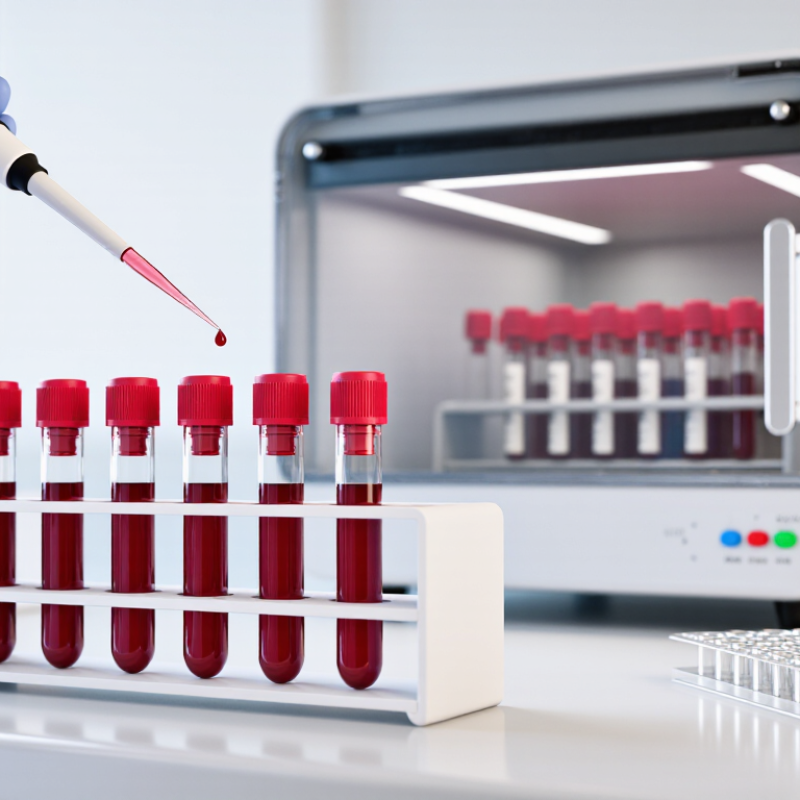
China Top Ad Plasma Biomarkers Suppliers?

Alzheimer’s Plasma Biomarkers: WHO’s 55 Million-Person Disease Burden

China Top AD Plasma Biomarkers Suppliers?

WHO estimates that more than 55 million people live with dementia worldwide. Over 60% live in low- and middle-income countries, with nearly 10 million new cases each year. Alzheimer’s disease contributes roughly 60–70% of dementia cases, making scalable blood testing increasingly important. Plasma biomarkers may help identify pathological changes earlier, but they do not replace clinical assessment.

For China-based research and diagnostic procurement, suppliers should demonstrate validated measurements for p-tau217, p-tau181, Aβ42/40, GFAP, and NfL. The 2024 Alzheimer’s Association diagnostic criteria recognize blood-based biomarkers as promising tools, especially when they show strong agreement with amyloid or tau reference methods. Still, performance varies between platforms. Sample handling, antibody design, calibration, and population differences can change results.

The strongest evidence comes from independent cohorts, transparent sensitivity data, and published comparison studies. A supplier should report limits of detection, precision, interference testing, and results across age groups. China’s large and diverse population offers valuable validation opportunities. Yet a single hospital cohort may not represent every region. That limitation deserves attention. I would also question unusually high accuracy claims without external validation. WHO’s disease burden is vast, while plasma testing remains an evolving clinical technology. Clear reporting matters more than impressive marketing language.

Key Assays: Aβ42/40, p-tau181, p-tau217, NfL, and GFAP

China’s plasma biomarker suppliers are increasingly assessed by analytical evidence, not catalog size. The essential panel includes Aβ42/40, p-tau181, p-tau217, NfL, and GFAP. Each marker answers a different clinical question.

Aβ42/40 reflects amyloid imbalance, while p-tau181 and p-tau217 track Alzheimer’s-related tau pathology. NfL indicates neuronal injury. GFAP reflects astrocytic activation, but it is not disease-specific.

The 2024 Alzheimer’s Association Facts and Figures report estimates that 6.9 million Americans aged 65 and older live with Alzheimer’s disease. The World Health Organization reports more than 55 million people worldwide live with dementia. These figures increase demand for scalable blood testing.

Still, assay quality matters. A supplier should provide calibration data, limit-of-quantification results, lot-to-lot studies, and external validation across Chinese and international cohorts. Small sample sets can look impressive.

Published studies have shown p-tau217 can distinguish Alzheimer’s pathology more accurately than older plasma markers in some cohorts, although performance varies by population and reference standard.

NfL and GFAP are useful for triage and disease monitoring, but kidney function, age, and inflammation may alter results.

That complicates interpretation. Chinese laboratories should examine matrix effects, freeze-thaw stability, and turnaround time using real clinical samples.

Reports such as the 2024 Alzheimer’s Association Facts and Figures and recent peer-reviewed plasma biomarker studies offer useful benchmarks, but no single assay should be treated as definitive.

China Supplier Ranking: NMPA Status, ISO 13485, and Clinical Evidence

Selecting top plasma biomarker suppliers in China requires more than comparing catalog prices. NMPA status should be checked at product level, not assumed from a company certificate. Review the registration or filing number, intended use, product model, manufacturing site, and validity date. A certificate alone is not clinical proof.

A practical ranking can assign 35% to NMPA compliance, 30% to ISO 13485 quality systems, 25% to clinical evidence, and 10% to technical support. ISO 13485 records should show lot traceability, deviation handling, supplier controls, and corrective actions. Ask for stability data, reagent storage limits, and transport records. Details matter.

Clinical evidence deserves careful reading. Stronger suppliers may provide multicenter studies, defined patient populations, reference methods, sensitivity, specificity, and confidence intervals. Evidence should match the intended diagnostic setting. Plasma handling also matters: hemolysis, repeated freeze-thaw cycles, and delayed centrifugation can change results. Some published data may be promotional rather than independently reviewed. That weakness should remain visible in the ranking.

During evaluation, request sample reports and inspect whether claimed performance survives routine laboratory conditions. A supplier may look excellent on paper but respond slowly to a failed quality-control run. My ranking would therefore remain provisional until technical verification, documentation review, and a small feasibility assessment are completed.

Performance Benchmarks: Plasma p-tau217 Reports Over 90% Diagnostic Accuracy

China Top Ad Plasma Biomarkers Suppliers?

Plasma p-tau217 has become a leading benchmark for blood-based Alzheimer’s disease assessment. Several published reports describe diagnostic accuracy above 90% in carefully selected cohorts. That number is impressive, but it is not universal. Performance depends on the assay platform, participant diversity, and the reference standard used. Experienced laboratories should report sensitivity, specificity, confidence intervals, and invalid-test rates. A strong supplier also explains sample requirements, calibration procedures, and inter-laboratory reproducibility.

In practical testing, EDTA plasma handling matters. Delayed centrifugation, repeated freeze-thaw cycles, or visible hemolysis may shift results. Suppliers should provide stability data and clear instructions for transport, storage, and quality control.

Comparisons against amyloid PET or cerebrospinal fluid markers add credibility. Still, accuracy in a research cohort may fall in routine clinics. That limitation deserves attention. I would not judge a supplier by one headline percentage alone.

Tips: Ask for independent validation data, not only internal results. Check whether the study included older adults with kidney disease, mixed symptoms, and common comorbidities. Review the assay’s lower detection limit and lot-to-lot variation. Request blinded comparison results when available. A reliable technical team should discuss uncertain samples honestly, including borderline p-tau217 values. Small operational details often decide whether a promising biomarker performs consistently at scale.

Supplier Profiles: Reagents, Testing Kits, Instruments, and CRO Services

China’s plasma biomarker suppliers cover four practical categories: reagents, testing kits, instruments, and CRO services. Reagent providers usually offer antibodies, calibrators, standards, and sample-preparation materials. Testing-kit suppliers focus on ELISA, chemiluminescence, and multiplex panels. Instrument suppliers support LC-MS/MS, immunoassay, and automated liquid handling. CROs connect these tools through method development, validation, and clinical sample testing.

The 2024 Grand View Research report valued the global proteomics market at more than USD 30 billion in 2023. This growth increases demand for stable plasma workflows. A capable supplier should show lot-to-lot data, matrix-effect studies, detection limits, and stability records. ISO 13485 can support medical-device quality systems, while ISO/IEC 17025 strengthens laboratory testing credibility. These certificates help, but they do not replace raw validation documents.

CRO profiles deserve closer review. Ask about temperature logs, chain-of-custody controls, freeze-thaw experiments, and anonymized reporting. For instruments, inspect calibration intervals and service response times. For kits, compare recovery, cross-reactivity, and interference from hemolysis or lipemia. A large catalog is not proof of performance. Sometimes, a smaller supplier provides clearer technical files and faster troubleshooting. That matters during a study. However, public profiles rarely reveal every limitation, so independent verification remains necessary before purchasing or transferring patient samples.