
The global hair care market is expanding, but supplier quality remains uneven. Grand View Research valued the market at approximately USD 91.6 billion in 2023. It projects continued growth through 2030, supported by premium products, scalp care, and personalized routines. Circana also reported stronger beauty spending in several major markets during 2024. These figures create opportunity for brands seeking dependable Private Label Hair Cosmetics suppliers.
However, growth alone does not prove manufacturing expertise. A successful supplier must show formula experience, ingredient traceability, stability testing, packaging control, and consistent batch records. McKinsey’s beauty industry research highlights premiumization, wellness, and digital discovery as important consumer trends. Those trends affect shampoo, conditioner, scalp serum, styling cream, and treatment development. The product must also feel right in the hand. Think of a pump that does not clog, a conditioner that rinses cleanly, and a label that survives a humid bathroom.
Cosmetic chemist Perry Romanowski has stated, “The most important thing about a cosmetic product is that it works.” That simple principle deserves more attention. It challenges brands to test claims instead of copying fashionable ingredients. Supplier comparisons should therefore examine laboratory evidence, minimum order quantities, production lead times, and customer support. Certifications can help, but they should never replace independent verification. Market reports provide direction, not certainty. Their estimates vary, and some private-label data remains fragmented. This guide reviews leading suppliers worldwide through a practical lens, balancing innovation, manufacturing capability, transparency, and realistic brand needs.
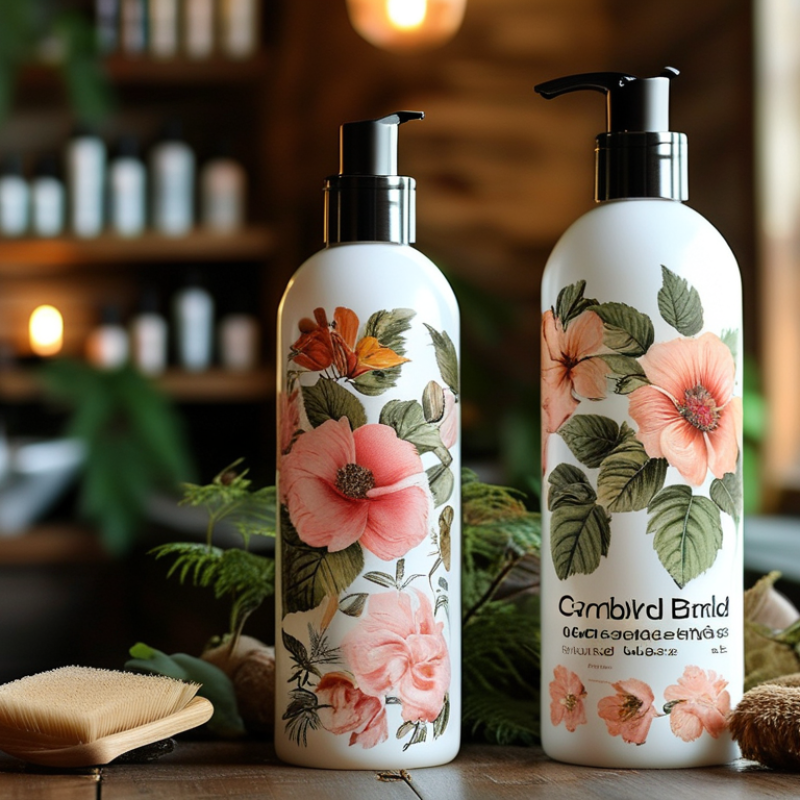
Private label hair cosmetics suppliers provide more than bottles with a custom logo. They help turn a product idea into a tested formula for shampoo, conditioner, masks, oils, or styling creams. Experienced teams review hair type, texture, fragrance, and intended use before recommending ingredients. They may offer ready-made bases or develop a tailored formula. Custom work usually takes longer. That trade-off matters.
A capable supplier normally provides samples, ingredient lists, safety data, stability testing, and production records. These documents help buyers check quality and support responsible market entry. Many suppliers also handle filling, labeling, packaging, batch coding, and shipping preparation. Ask about minimum order quantities and repeat-order consistency. Small details matter. A bottle that leaks can damage trust quickly.
Reliable partners explain testing limits instead of making perfect claims. They should communicate lead times, formula changes, storage conditions, and complaint procedures clearly. In my experience, sample approval is only one checkpoint, not final proof of quality. Production batches still need inspection. Some suppliers offer laboratory testing through qualified facilities, but buyers should verify the reports themselves. The process can feel slower than expected. Yet careful review protects performance, safety, and customer confidence.

Supplier quality is more than attractive packaging and a low quotation. A reliable partner should provide current ISO 22716 GMP evidence, ingredient specifications, Certificates of Analysis, microbial results, stability data, and complete batch traceability. Review whether test methods match the finished product, not only the raw materials.
The EU Commission’s Safety Gate 2024 report identified cosmetics as 36% of reported dangerous-product alerts. That figure shows why regulatory checks must begin before sampling.
For European sales, verify the responsible person, product information file, safety assessment, and compliant claims under Regulation (EC) No 1223/2009. For the United States, check facility registration, product listing, adverse-event procedures, and records required under the Modernization of Cosmetics Regulation Act.
Supplier documents should also show allergen control, preservative challenge testing, and a documented CAPA process. A certificate alone is not proof. It can be outdated, incomplete, or unrelated to your formula. I still find this easy to overlook.
Tips:
Private label hair cosmetics suppliers now offer more than filling and labeling. According to Grand View Research’s 2024 analysis, the global hair care market reached approximately US$97 billion in 2023. This scale increases pressure on suppliers to deliver consistent quality, flexible minimum orders, and faster product development. Reliable manufacturers should provide GMP-based production, ISO 22716 procedures, batch traceability, and documented quality checks.
Formulation expertise remains a decisive service. Experienced laboratories can develop shampoos, conditioners, scalp serums, masks, and styling products for different hair textures. They should test viscosity, pH, microbiological safety, packaging compatibility, and stability under heat. Sensory trials matter too. A formula may pass technical testing yet feel heavy, greasy, or difficult to rinse. That gap is easy to overlook.
Customization can include fragrance direction, botanical extracts, active ingredients, texture, color, bottle shape, and dispensing systems. Suppliers should also support INCI documentation, claims substantiation, safety assessments, and market-specific compliance reviews. The Personal Care Products Council reported that consumers increasingly examine product ingredients and safety information, making transparent documentation commercially important. However, customization is not always an advantage. Too many options can weaken the brief, increase costs, and delay launch. A practical supplier asks difficult questions about target users, climate, shelf life, and production volume before proposing a formula. Small pilot batches help expose weaknesses early. Perfect briefs rarely exist.
Top Private Label Hair Cosmetics Suppliers Worldwide
Regional Landscape of Global Private Label Suppliers
Europe remains a strong sourcing region for private label hair cosmetics. Suppliers often focus on formulation quality, traceable ingredients, and refined packaging. Many facilities support sulfate-free shampoos, scalp treatments, masks, and styling products. Buyers should review manufacturing licenses, stability data, and ingredient documentation before placing an order. Details matter.
North America commonly offers flexible development services and lower minimum order quantities. This suits growing retailers testing a new haircare range. Suppliers may provide laboratory samples, fragrance adjustments, and packaging coordination. However, production costs can rise quickly when custom bottles or complex formulas are required. The first quotation rarely tells the whole story.
Asia-Pacific includes large manufacturing networks with broad packaging and formulation capabilities. Some suppliers serve both mass-market and salon-focused projects. Lead times can be competitive, but communication requires discipline. Confirm sample approval, batch testing, production schedules, and export documents in writing. Latin America, the Middle East, and Africa also offer useful regional partners, especially for products suited to local hair textures and climate conditions. Yet supplier information can be uneven. I would not rely on a polished catalogue alone. An independent factory audit, recent certificate review, and small pilot order provide stronger evidence. No region is perfect. Even experienced buyers sometimes underestimate reformulation delays, carton changes, or local registration requirements. A reliable supplier is measured through consistent batches, transparent records, and responsive corrective action.
Asia-Pacific represents the largest demand center for hair-care products, followed by North America and Europe. Latin America and the Middle East & Africa remain smaller but developing regional markets, creating opportunities for private label suppliers with flexible formulations, compliant production, and scalable minimum order quantities. The percentages are rounded regional estimates of global hair-care market demand and are used as a demand-side indicator rather than a count of suppliers.
Top Private Label Hair Cosmetics Suppliers Worldwide
Private label hair cosmetics contracts should define more than unit price. Include formula ownership, minimum order quantities, batch tolerances, testing duties, and lead times. A practical agreement also covers packaging changes, rejected goods, recalls, and payment milestones. Pricing should show every layer: formula, bottle, filling, freight, duties, inspection, and warehousing. A low factory quote can become expensive after landed costs.
Grand View Research estimates the global hair care market reached about $91.6 billion in 2023. It projects approximately 3.7% annual growth through 2030. This growth creates opportunity, but also increases pressure on supply reliability. Ask suppliers for batch records, stability data, and raw material traceability. Dual sourcing key ingredients can reduce disruption risk. However, it may increase testing costs. That trade-off deserves a written calculation. McKinsey’s beauty market report projects the broader market could approach $590 billion by 2028. Forecasts are never clean.
Tips: Request three landed-cost scenarios before signing. Compare air, sea, and regional fulfillment options. Set a safety-stock trigger for bottles and pumps. Test a pilot batch first. I still see buyers approve packaging too early. That mistake can create months of avoidable inventory. Ask for written notice before any formula, supplier, or production-site change. Controls must be practical, not decorative.
| Supplier Category | Typical Product Scope | Common MOQ Range | Indicative Factory Price* | Typical Development Lead Time | Standard Production Lead Time | Contract and Compliance Priorities | Supply Chain Considerations |
|---|---|---|---|---|---|---|---|
| Large-scale contract manufacturer | Shampoo, conditioner, masks, treatments, styling products and scalp-care ranges | 5,000–20,000 units per SKU | US$1.20–US$4.50 per unit, depending on formula, pack size and components | 8–16 weeks for formula adaptation and testing | 6–12 weeks after approval of artwork and specifications | Quality agreement, product specifications, change-control procedure, batch records, GMP documentation and regulatory responsibilities | Competitive unit economics and strong capacity; higher minimums and longer approval processes may apply |
| Mid-sized flexible manufacturer | Core wash-and-care products, color-safe care, textured-hair products and salon treatments | 1,000–5,000 units per SKU | US$1.80–US$6.50 per unit, excluding freight and market-specific taxes | 6–12 weeks for sampling, testing and revisions | 5–10 weeks after final sign-off | Clear ownership of formula, packaging artwork, claims substantiation, testing costs, acceptance criteria and payment milestones | Often suitable for emerging brands; production slots should be reserved before seasonal demand peaks |
| Low-MOQ startup-oriented manufacturer | Stock formulas, white-label shampoos, conditioners, oils, leave-in products and simple styling items | 100–1,000 units per SKU | US$2.50–US$10.00 per unit, often with fewer customization options | 2–8 weeks when using existing formulas and packaging | 3–8 weeks depending on stock availability | Confirm whether the formula is exclusive, review label compliance, define defect remedies and document shelf-life information | Lower inventory exposure, but stock availability, component substitutions and reorder consistency require close monitoring |
| Premium clean-beauty manufacturer | Sulfate-free, silicone-free, naturally positioned, vegan and certified-organic-oriented hair products | 2,000–10,000 units per SKU | US$2.50–US$8.00 per unit because of specialized ingredients, testing and packaging requirements | 10–20 weeks for stability, compatibility and claims review | 8–14 weeks after formula and packaging approval | Ingredient traceability, restricted-substance controls, certification scope, natural-origin calculations and substantiation of marketing claims | Specialty raw materials may have longer replenishment cycles and greater exposure to crop or seasonal availability |
| Professional and salon-focused manufacturer | High-performance masks, bond-care products, technical treatments, developers and backbar sizes | 3,000–15,000 units per SKU | US$2.00–US$9.00 per unit, influenced by active ingredients and professional-size packaging | 8–18 weeks for performance validation and salon-use testing | 6–12 weeks after validated specifications are released | Performance standards, professional-use instructions, safety data, training materials and responsibility for technical claims | Packaging must withstand frequent professional handling; demand planning should account for distributor and salon replenishment cycles |
| Color and chemical-treatment specialist | Hair color, toners, lighteners, permanent treatments, relaxers and technical chemical services | 5,000–25,000 units per SKU | US$1.50–US$7.50 per unit, excluding developer systems and hazardous-goods handling charges | 12–24 weeks for compatibility, efficacy, safety and regulatory review | 8–16 weeks after release to production | Strict safety dossier, ingredient restrictions, stability testing, warning statements, transport classification and market-specific notification requirements | Hazardous-goods logistics, segregation, temperature control and additional documentation may affect landed cost and delivery time |
| Packaging-integrated manufacturer | Complete solutions combining formula filling, bottles, tubes, jars, pumps, labels and secondary cartons | 2,000–15,000 units per SKU | US$1.50–US$7.00 per finished unit, depending on decoration and component complexity | 8–18 weeks for component sourcing, compatibility and artwork approval | 6–14 weeks after components arrive and pass inspection | Component specifications, artwork approval, packaging compatibility, incoming inspection, spare-component policy and tooling ownership | One-stop sourcing can simplify coordination; shortages of pumps, caps or decorated components can delay the entire order |
| Regional nearshore manufacturer | Private-label ranges optimized for a specific domestic or regional market | 500–5,000 units per SKU | US$2.50–US$10.00 per unit, generally offset by shorter transit and easier communication | 4–12 weeks for formula and packaging development | 4–10 weeks after approval | Local regulatory compliance, language requirements, product liability, recall process and service-level commitments | Shorter transport routes can reduce working capital and disruption risk, although labor and manufacturing costs may be higher |
| Export-oriented full-service supplier | Multi-market hair-care portfolios with formulation, filling, packaging, documentation and export support | 1,000–10,000 units per SKU | US$1.50–US$6.50 per unit before freight, duties, insurance and local compliance costs | 8–16 weeks for export documentation and product development | 6–14 weeks after final approval and deposit | Incoterms, certificate of analysis, certificate of origin, batch traceability, export documents, inspection rights and dispute resolution | Compare total landed cost rather than ex-works price; customs clearance and document accuracy can materially affect delivery |
| Refill and sustainable-packaging specialist | Refill pouches, solid shampoo, concentrated treatments, aluminum packs and reduced-plastic formats | 2,000–12,000 units per SKU | US$2.00–US$9.00 per unit, with tooling and specialized packaging potentially charged separately | 10–22 weeks for packaging trials, leakage tests and stability assessment | 8–16 weeks after packaging validation | Environmental claims substantiation, packaging material declarations, recyclability criteria, leak testing and end-of-life instructions | New formats may require dedicated tooling, specialized filling equipment and additional warehouse handling procedures |
| *Pricing note: The price ranges are broad industry planning benchmarks for private-label hair cosmetics. Actual quotations vary by region, formula complexity, active ingredients, packaging, order volume, testing, certification, freight, duties, currency and payment terms. Always request a written quotation with an itemized landed-cost calculation. | |||||||
| Recommended contract checkpoints: Confirm formula and artwork ownership, exclusivity terms, minimum order quantities, sample approval, quality standards, batch-release documents, change notification, delivery tolerances, defective-goods remedies, recall responsibilities, confidentiality, intellectual-property protection and governing law. | |||||||