
Global buyers increasingly view Cleaning Wet Wipes as practical hygiene tools, not simple convenience products. They support hospitals, offices, hotels, transport hubs, and households. A sealed pack can deliver controlled moisture beside a patient’s bed or inside a busy airport restroom.
Grand View Research valued the global wet wipes market at approximately USD 21.3 billion in 2023. Its report also forecasts steady growth through 2030. Smithers’ The Future of Global Wipes to 2028 highlights demand for improved materials, safer formulations, and stronger sustainability performance. These findings matter to importers. They must evaluate absorbency, tensile strength, microbial claims, packaging integrity, and shelf stability. Price alone is a weak purchasing guide.
Brian Sansoni, a cleaning-industry expert at the American Cleaning Institute, has said, “Cleaning products are essential to public health.” His statement explains the wider responsibility behind every wipe specification. Buyers need documented testing, traceable raw materials, and suppliers with consistent quality systems. They should also distinguish cleaning claims from disinfecting claims.
A wipe may look clean. That proves very little.
The category is not flawless. Some products rely heavily on plastic fibers, while disposal infrastructure remains uneven across markets. Biodegradable claims also require careful verification. Responsible global sourcing therefore combines convenience with evidence, compliance, and realistic environmental assessment. Cleaning Wet Wipes are essential when they solve a defined hygiene problem, perform consistently, and respect the people and environments they serve.
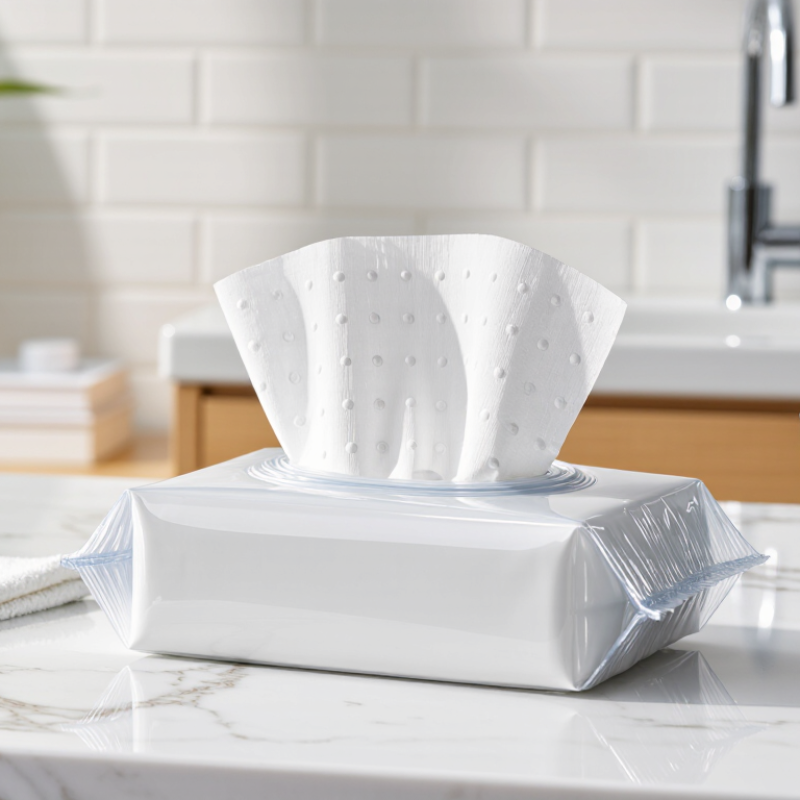
Cleaning wet wipes are pre-moistened sheets designed to lift dirt, oils, and everyday surface residues. Most contain nonwoven fibers, water, mild surfactants, and a controlled preservative system. The sheet stores the cleaning liquid until pressure releases it during wiping. Its texture creates friction, helping remove particles that water alone may leave behind.
The process is simple but not weak. Moisture softens dried residue, while surfactants loosen oils from a surface. The fibers then capture the loosened material as the user wipes. A strong sheet stays intact around corners and after several passes. Cleaning is not the same as disinfection. Unless a product has suitable testing and authorization, buyers should not treat it as a disinfectant. This distinction is easy to miss.
Global buyers usually examine fiber composition, sheet size, thickness, liquid ratio, scent, packaging, and shelf life. They should also request quality records, stability data, and testing that matches the intended market. In real purchasing work, a wipe may feel excellent but fail when the pack dries after opening. That problem is frustrating. I would not judge performance from softness alone. A practical check includes wiping glass, plastic, and painted surfaces, then inspecting lint, streaks, and residue. Clear specifications and repeatable production matter more than attractive claims.
| Data Dimension | What It Means | Typical or Recognized Data | Why It Matters to Global Buyers |
|---|---|---|---|
| Product definition | A pre-moistened disposable sheet designed to remove dirt, oils, residues, or microorganisms from a defined surface. | A wipe normally contains a nonwoven substrate, a liquid formulation, and sealed packaging. | Helps buyers match the product with household, institutional, industrial, personal-care, or surface-disinfection applications. |
| Cleaning mechanism | The liquid loosens soils while the sheet captures and removes them through wiping action. | Performance depends on contact time, wiping pressure, liquid coverage, and the number of wiping passes. | Supports accurate product comparisons and prevents unsupported claims based only on fragrance or moisture level. |
| Substrate material | The substrate is the absorbent sheet that delivers the formulation and physically removes soil. | Common options include polyester, polypropylene, viscose, cellulose, and blends of synthetic and plant-based fibers. | Material selection affects strength, softness, absorbency, linting, biodegradability, and disposal requirements. |
| Liquid formulation | The liquid may dissolve or suspend soils and can include functional ingredients. | Water is commonly used as the main carrier; other ingredients may include surfactants, solvents, preservatives, chelating agents, moisturizers, or fragrance. | Formulation affects cleaning power, material compatibility, skin tolerance, odor, shelf life, and regulatory classification. |
| Cleaning versus disinfection | Cleaning removes soil; disinfection uses an active substance and validated exposure conditions to reduce specified microorganisms. | A cleaning wipe should not be marketed as a disinfectant unless the finished product has appropriate efficacy data and meets the destination market’s requirements. | Prevents inaccurate claims and reduces compliance risks during import, registration, and retail distribution. |
| Wipe dimensions | Sheet size determines coverage per wipe and influences packaging efficiency. | Common commercial formats include approximately 15 × 20 cm for compact personal-use wipes and larger formats for household or professional cleaning. | Allows buyers to balance surface coverage, unit consumption, shipping volume, and user convenience. |
| Basis weight | Basis weight is the mass of substrate per unit area and is commonly expressed in grams per square metre. | Many wet-wipe substrates fall within roughly 30–100 g/m², depending on the intended use and construction. | Higher basis weight can improve hand feel and strength, but may increase material cost and shipping weight. |
| Moisture content | Moisture content is the amount of liquid retained by the wipe before use. | Commercial products commonly contain liquid at a level selected to provide sufficient coverage without excessive dripping; the exact level varies by substrate and application. | Consistent moisture supports predictable cleaning performance and reduces leakage, drying, and customer complaints. |
| Packaging format | Packaging protects the formulation, controls dispensing, and limits evaporation and contamination. | Common formats include soft packs with resealable labels, rigid tubs, flow packs, sachets, and bulk refill packs. | Format affects shelf life, transport efficiency, retail presentation, and suitability for institutional dispensing. |
| Preservation and shelf life | Preservation helps control microbial growth in water-based formulations during the stated shelf life. | Shelf life must be established through product stability, packaging compatibility, and appropriate microbiological testing; it is not universal across all wipes. | Reliable shelf-life data is essential for international warehousing, long-distance shipping, and stock rotation. |
| Surface compatibility | Compatibility indicates whether repeated use is unlikely to damage the intended surface when used as directed. | Testing may cover plastics, stainless steel, glass, painted surfaces, laminates, or other specified materials. | Reduces the risk of staining, corrosion, cracking, haze, or removal of protective coatings in commercial use. |
| Relevant testing | Testing verifies physical, chemical, microbiological, packaging, and claim-related performance. | Typical evaluations include tensile strength, absorbency, linting, pH, microbial limits, stability, leakage, and preservative effectiveness where applicable. | Independent and documented testing improves purchase decisions and supports market-entry dossiers. |
| Recognized standards | Standards provide consistent methods for assessing quality, safety, and antimicrobial claims. | Examples include ISO 22716 for cosmetic good manufacturing practices, EN 1276 for bactericidal activity testing, and EN 14476 for virucidal activity testing when relevant. | The applicable standard depends on product claims, intended use, and the laws of the destination market. |
| Disposal requirements | Most cleaning wipes are designed for disposal after one use unless the label states otherwise. | Unless specifically tested and labeled as flushable, wipes should not be flushed because they may contribute to sewer blockages. | Clear disposal instructions help meet consumer-safety expectations and reduce environmental and plumbing-related risks. |
| Sustainability factors | Environmental performance depends on fiber source, manufacturing, packaging, transport, use, and disposal. | Cellulose-based fibers can be renewable, while biodegradability and compostability depend on the complete product and the applicable test conditions. | Buyers should request complete-product evidence rather than relying only on claims about individual fibers or packaging materials. |
| Key purchasing criteria | A balanced assessment covers product performance, compliance, logistics, cost, and end-user requirements. | Important specifications include substrate, basis weight, dimensions, liquid formulation, moisture level, pack count, shelf life, test reports, labeling, carton size, and minimum order quantity. | A complete specification sheet enables reliable supplier comparisons and reduces total landed cost and quality risk. |
Note: Actual specifications, regulatory obligations, and permitted claims vary according to the formulation, intended use, packaging, and destination market.