How to Optimize Dental Workflow with China Best Equipment?
Dental workflow optimization is not simply about buying faster equipment. It means making each step—from patient intake and imaging to treatment, sterilization, and follow-up—clearer and more dependable. China’s dental equipment market offers options across digital imaging, CAD/CAM systems, dental chairs, and sterilization units. The right choice depends on your clinic’s patient volume, room layout, staff skills, and service needs. A lower purchase price may look attractive. Downtime is not.
Dental technology educator Dr. John Flucke’s practical perspective can be paraphrased this way: “Choose technology to solve a real clinical bottleneck, then check whether it improves the work.” That is a useful test when comparing suppliers. Ask for product specifications, compatibility details, training plans, warranty terms, and local technical support. Then map a real procedure: Who captures the scan? Where does the file go? How long does the handoff take? A smooth demonstration is helpful, but a busy Tuesday morning is the better test.
Small delays add up. A scanner that exports files in the wrong format, or a chair that complicates room turnover, can slow the whole team. Review the workflow with clinicians and assistants before placing an order. Pilot equipment where possible, track waiting and turnaround times, and record staff feedback. Not every improvement will show up neatly in a spreadsheet. That is worth admitting. With careful evaluation and realistic training, well-matched equipment can support more consistent care and a calmer daily rhythm.
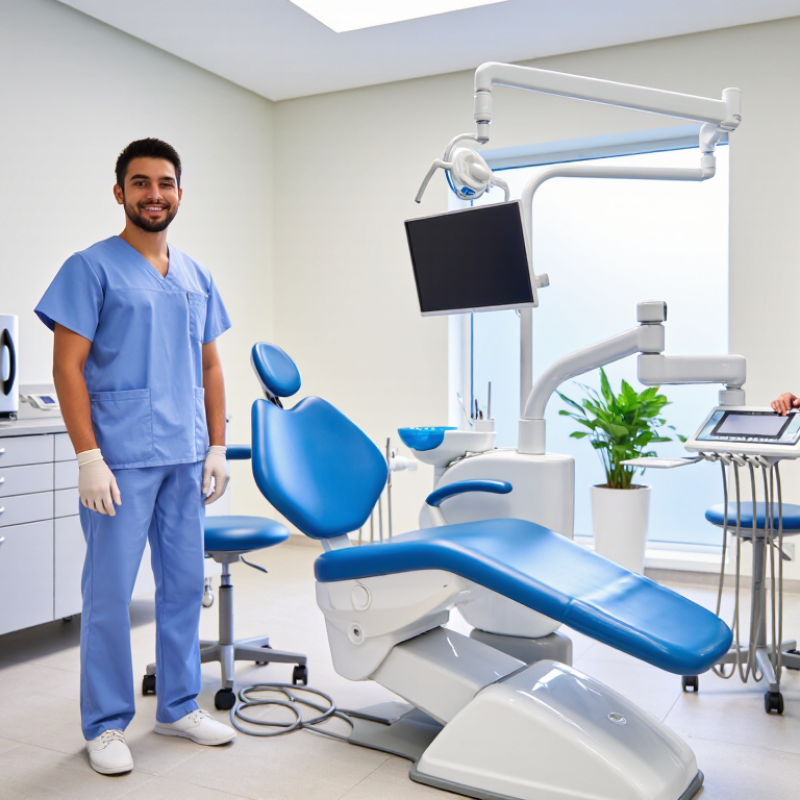
Map Patient and Instrument Flow Before Selecting China-Made Dental Equipment
Before comparing China-made dental equipment, draw two routes on a floor plan: patients from reception to chair, and instruments from chairside collection to sterilization and storage. The World Health Organization’s 2022 Global Oral Health Status Report estimates that oral diseases affect nearly 3.5 billion people worldwide. That scale makes efficient clinic flow important, but your own room layout should drive the purchase. Mark doorways, handwashing points, chair positions, and the distance staff carry used trays. Small details matter.
The CDC’s dental infection-control guidance separates instrument processing into receiving and cleaning, preparation and packaging, sterilization, and storage. Use those stages to assess whether a proposed washer, autoclave, or storage unit fits the actual route—not merely the floor area. Check door swing, utility connections, cycle capacity, and service access with the equipment supplier. Then simulate a busy session: one patient leaving, another arriving, and a tray moving toward decontamination. Watch for crossing paths. It is easy to miss a bottleneck on paper. I would also leave room for staff feedback after installation; a neat workflow diagram can still overlook a cramped corner or awkward reach.
Map Patient and Instrument Flow Before Selecting Dental Equipment
Example planning ratings (1 = lower coordination need; 5 = higher). These are illustrative, not measured benchmarks—rate your clinic’s actual workflow before comparing equipment.
Prioritize mapping treatment-room and sterilization flows, where patient movement and instrument turnover intersect. Use the results to define requirements for room layout, imaging access, instrument transport, and reprocessing capacity.
Evaluate Suppliers Against ISO 13485 and IEC 60601-1 Standards
When sourcing dental equipment from China, evaluate suppliers through documented quality controls, not catalog claims. ISO 13485 addresses quality management systems for medical devices. It does not certify every product or guarantee clinical performance. Ask for a current certificate and check that its scope covers the equipment you plan to buy. Confirm the legal manufacturer, production site, and model numbers match the documents. Details matter.
For electrically powered chairs, scalers, or imaging equipment, review evidence against IEC 60601-1, which covers basic safety and essential performance. Request test reports for the exact model and configuration, including accessories that affect electrical safety. A certificate alone may not show whether the tested unit matches your order. Ask how the supplier controls design changes, component substitutions, and batch traceability. Paperwork can mislead.
A practical assessment also includes service access, spare-part availability, and clear installation instructions. These affect workflow when a handpiece fails between appointments or a chair needs calibration. Discuss response times and staff training before purchase. Compare delivery and maintenance commitments in writing. I would not treat a low price as proof of efficiency; the evidence can be incomplete, and that deserves a second look. Check documents with the issuing body where possible, and have a qualified technical professional review safety reports before making a decision.
Integrate Imaging, Treatment Units, and Sterilization Into One Workflow
A connected dental workflow starts with room layout, not a shopping list. Place imaging near the treatment chair so staff can capture and review images without unnecessary patient movement. Keep the monitor visible from the clinician’s working position. Small details matter. Plan power, network access, and cable routes before installation; later changes can interrupt appointments.
Treatment units should support the clinic’s actual procedures and allow staff to reach commonly used instruments comfortably. In the sterilization area, create a clear path from used instruments through cleaning, packaging, sterilization, and storage. Keep clean and contaminated items apart. The route should be one-way. Documenting sterilization cycles and routine equipment checks helps teams follow consistent procedures, though the exact process should match local requirements.
When evaluating equipment made in China, check technical documentation, installation needs, local service availability, spare-part access, and staff training. Confirm that imaging systems can work with the clinic’s records and existing network before purchase. A demonstration using the planned room layout can reveal awkward steps that brochures miss. Even a well-designed setup may need adjustment after real appointments begin, so collect staff feedback and review the workflow regularly.
Reprocess Dental Handpieces Between Every Patient, as CDC Guidance Requires
How to Optimize Dental Workflow with China Best Equipment?
Dental handpieces must be reprocessed between every patient, according to CDC guidance. Wiping the outside is not enough. Clean and heat-sterilize each reusable handpiece according to its manufacturer’s instructions. Include detachable motors and attachments when their instructions require it. This protects patients and keeps the workflow consistent. It also takes time.
Tips: Keep used and sterilized handpieces in clearly separate areas. Maintain enough handpieces for the appointment schedule, and check sterilizer records routinely. Train staff to follow the same cleaning, packaging, and sterilization steps. Small labels can help, but they cannot replace training.
A practical setup depends on reliable sterilization equipment, clear instructions, and room for a clean-to-dirty workflow. Check that instruments are cleaned before sterilization, packaged correctly, and handled without contaminating them afterward. CDC recommendations should guide practice, while the equipment’s validated instructions determine its specific cycle and care requirements. Busy clinics can be tempted to rush. That is a real weak point, not a reason to skip a step. Review delays and handpiece shortages regularly, then adjust scheduling or inventory before they affect patient turnover.
How to Optimize Dental Workflow with China Best Equipment? - Reprocess Dental Handpieces Between Every Patient, as CDC Guidance Requires
| Workflow Stage |
Recommended Action |
CDC-Aligned Requirement |
Workflow Check |
| After each patient |
Remove the handpiece from the dental unit and transport it to the designated reprocessing area using appropriate handling precautions. |
Dental handpieces and attachments should be heat sterilized between patients. |
Keep used instruments separate from clean and sterile instruments. |
| Cleaning and preparation |
Clean the handpiece according to its manufacturer’s instructions. Complete any specified lubrication or maintenance before sterilization. |
Follow the handpiece manufacturer’s validated instructions for cleaning, lubrication, packaging, and sterilization. |
Confirm that staff can access the current instructions for each handpiece model. |
| Packaging and loading |
Package the cleaned handpiece as directed and load the sterilizer without overloading it. Use a cycle compatible with the device and packaging. |
Use a sterilization process compatible with the handpiece and follow the device and sterilizer instructions. |
Check package integrity and follow the sterilizer’s loading guidance. |
| Heat sterilization |
Run the complete validated sterilization cycle. Allow packages to dry and cool as directed before handling or storage. |
Heat sterilization between patients is recommended for dental handpieces and attachments. |
Do not release a load if cycle records or indicator results show a problem. |
| Load monitoring |
Review and document the sterilizer’s physical cycle readings and use the required chemical indicators. Perform biological monitoring at least weekly. |
CDC recommends monitoring each sterilizer load with mechanical and chemical indicators and using biological indicators at least weekly. |
Maintain sterilization records and follow established procedures when monitoring results are unsatisfactory. |
| Storage and return to use |
Store processed handpieces in their intact packages in a clean, dry area. Reprocess any package that is wet, torn, or otherwise compromised. |
Maintain the sterility of processed instruments until they are used; handle packages to avoid contamination. |
Check package condition before bringing a handpiece back to the treatment area. |
| Methods to avoid |
Do not substitute surface wiping, surface disinfection, or immersion for the required handpiece reprocessing procedure. |
Surface disinfection and immersion are not substitutes for heat sterilization of dental handpieces between patients. |
Verify that the written procedure specifies cleaning and heat sterilization, not surface treatment alone. |
Reference: CDC, Summary of Infection Prevention Practices in Dental Settings. Always follow the current manufacturer instructions for the handpiece, sterilizer, and packaging.
Maintain Dental Unit Waterlines at ≤500 CFU/mL, per CDC Recommendations
How to Optimize Dental Workflow with China Best Equipment?
Dental unit waterlines can look clean while biofilm remains inside narrow tubing. CDC guidance recommends dental treatment water contain
no more than 500 CFU/mL of heterotrophic bacteria.
This benchmark matters for routine, nonsurgical care.
Surgical procedures require sterile water or saline delivered through a sterile system that bypasses standard dental unit waterlines.
Build waterline care into the daily setup. Follow the dental unit and treatment-product instructions, and record treatment dates where staff can see them. Flush lines as directed, but do not treat flushing as a substitute for waterline treatment or monitoring.
Use the specified test method and schedule; a simple log can reveal missed steps or rising counts. Small details matter. A line may seem fine.
Equipment can support a smoother routine when controls are accessible and maintenance steps are clear. Still, even a well-designed unit cannot replace staff training or water testing.
If results exceed 500 CFU/mL, follow the treatment-product instructions and retest before relying on the line for patient care.
Routines get missed on busy days; that is worth admitting, then correcting with clear assignments and records.