Register your office to receive a $50 credit towards your first case.

China Top Implant Dentistry Solutions for Global Buyers?

China is becoming an important sourcing base for implant dentistry solutions, supported by broad manufacturing capacity and expanding dental demand. The World Health Organization’s Global Oral Health Status Report 2022 estimates that oral diseases affect nearly 3.5 billion people worldwide. This creates sustained demand for dependable implant systems, surgical instruments, digital workflows, and restorative components.

Market estimates differ. Grand View Research valued the global dental implants market at approximately USD 5.2 billion in 2023, while other industry reports provide lower figures because they use different product definitions. That difference matters. It reminds buyers to examine evidence, not promotional claims.

Quality must remain visible.

For global purchasers, China’s strongest opportunities include OEM development, CAD/CAM compatibility, surface-treated implants, guided surgery kits, and efficient private-label production. However, a competitive price cannot replace clinical documentation. Buyers should review ISO 13485 certification, material traceability, sterilization validation, biocompatibility testing, and applicable market registrations. They should also confirm whether a supplier’s evidence covers the exact implant model being offered.

Small details reveal maturity. Ask for batch records, torque specifications, packaging photographs, and complaint-handling procedures. Request samples before signing volume agreements. A factory tour can expose process discipline—or expose its absence.

No supplier is perfect. Some websites overstate clinical performance, and some buyers compare products only by unit price. That approach is risky. A reliable introduction to China’s implant dentistry solutions must balance manufacturing value with patient safety, regulatory responsibility, and long-term clinical confidence.

China Top Implant Dentistry Solutions for Global Buyers?

China’s Dental Implant Industry: Scope, Products, and Market Position

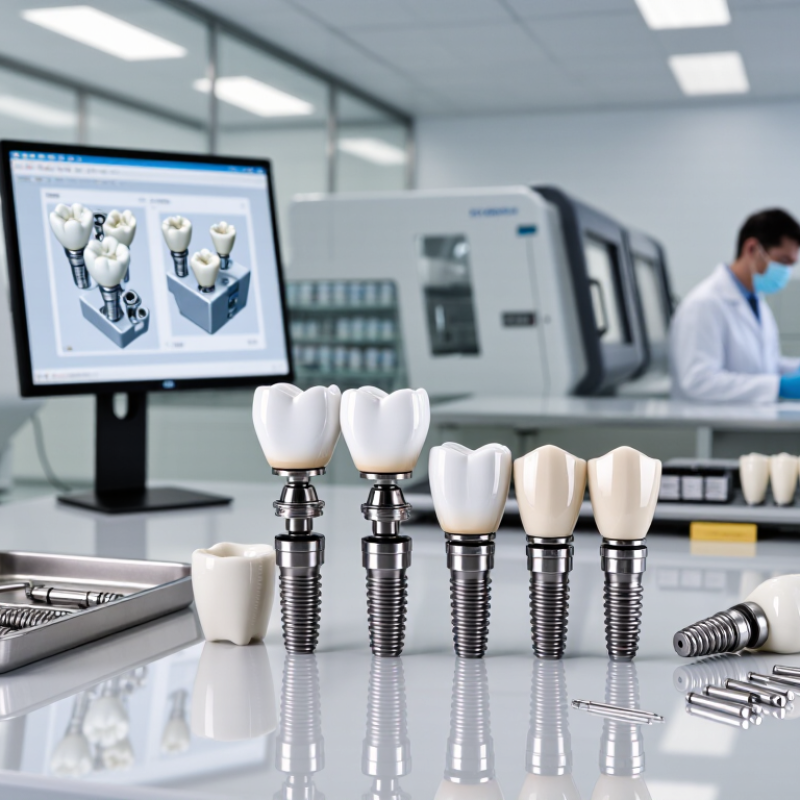
China’s dental implant industry now covers implant fixtures, abutments, surgical tools, digital planning systems, and restorative components. Manufacturers serve hospitals, private clinics, laboratories, and international distributors. Production often includes precision machining, surface treatment, sterile packaging, and batch inspection. Titanium remains widely used, while zirconia products support selected aesthetic applications. Digital guides and scanning systems are also expanding. However, quality varies across suppliers, so a large catalog proves little. Buyers should review clinical evidence, material certificates, traceability records, and quality management documents.

Tips: Ask for samples before placing a large order. Check thread accuracy, packaging integrity, and labeling consistency. Request current regulatory documents for your target market. Compare warranty terms and complaint response times. A supplier that explains limitations clearly may be more reliable than one promising perfect results.

China’s market position is strengthened by flexible manufacturing, competitive pricing, and growing engineering expertise. Many suppliers can support private-label production or customized packaging. This flexibility helps overseas buyers manage different clinical preferences and distribution models. Still, low prices may reflect limited clinical data or weaker after-sales support. Import procedures, registration requirements, and local training can also affect the final cost. My practical view is cautious: manufacturing capacity is impressive, but independent verification remains essential. Some product claims sound polished, yet the supporting evidence may be thin.

Key Implant Dentistry Solutions Available from Chinese Suppliers

China’s implant dentistry supply sector now offers more than low-cost components. According to the WHO Global Oral Health Status Report (2022), oral diseases affect nearly 3.5 billion people worldwide. That burden creates demand for predictable, scalable treatment systems. Chinese suppliers commonly provide titanium implants, abutments, surgical drills, guided-surgery kits, healing components, and CAD/CAM prosthetic workflows. Some also offer zirconia restorations and regenerative materials, subject to local approval requirements.

Market evidence supports this expansion. Grand View Research estimates the global dental implants market could reach about USD 7.7 billion by 2030, with digital planning accelerating adoption. For global buyers, the useful question is not simply whether a product is inexpensive. It is whether the supplier documents surface treatment, dimensional tolerances, sterilization controls, and biocompatibility testing. ISO 13485 certification helps, but it does not replace product-specific verification or clinical evidence.

Experienced buyers should request lot traceability, inspection records, material certificates, shelf-life data, and clear instructions for use. A supplier should explain torque ranges through practical training, not vague promises. Sample cases matter. Ask for radiographic evidence and follow-up data when available. The weak point can be communication after shipment. Language gaps, changing components, or incomplete files may delay treatment. Chinese manufacturers can provide efficient customization, but clinicians remain responsible for patient selection and placement. Price still matters. It should never become the only metric.

China Top Implant Dentistry Solutions for Global Buyers? – Key Implant Dentistry Solutions Available from Chinese Suppliers

Implant Dentistry Solution Primary Clinical Use Common Materials Typical Product Components Key Technical Characteristics Common Compliance Documentation Global Buyer Considerations
Endosseous Dental Implant Systems Replacement of missing teeth with single crowns, bridges, or implant-supported dentures. Commercially pure titanium Titanium alloy Zirconia Implant fixture, cover screw, healing abutment, prosthetic abutment, transfer component, and laboratory analog. Common designs include tapered or cylindrical bodies, internal or external implant–abutment connections, and roughened or treated surfaces intended to support osseointegration. Quality-management certification, material certificates, sterilization validation, risk-management records, and market-specific medical-device documentation. Confirm dimensional compatibility, surface-treatment specifications, fatigue-test data, sterility status, shelf life, and regulatory acceptance in the destination market.
Immediate-Loading Implant Solutions Selected cases where a provisional restoration is placed shortly after implant surgery, subject to clinical stability and case selection. Titanium Titanium alloy Implants with suitable primary-stability design, temporary abutments, multi-unit abutments, prosthetic cylinders, and provisional components. Often features tapered geometry, cutting threads, platform options, and prosthetic components designed for temporary or immediate restoration workflows. Mechanical fatigue data, insertion-torque guidance, surgical instructions, sterilization records, and clinical-use documentation. Immediate loading is not appropriate for every patient; buyers should assess published indications, primary-stability requirements, and compatibility with the intended restorative workflow.
Narrow-Diameter Implant Solutions Selected narrow-ridge or limited-space cases where a standard-diameter implant may not be suitable. Commercially pure titanium Titanium alloy Narrow implants, compatible healing components, impression components, and reduced-diameter prosthetic abutments. Smaller implant diameters require careful evaluation of mechanical loading, implant length, bone quality, occlusion, and prosthetic design. Dimensional inspection records, fatigue testing, material traceability, sterilization validation, and approved indications for use. Check minimum restorative space, component availability, allowable angulation, torque values, and whether the system is intended for anterior, posterior, or denture-retention applications.
Zygomatic and Extra-Long Implant Solutions Specialized rehabilitation for severely resorbed maxillae when conventional implant placement may require extensive grafting or may not be feasible. Titanium Titanium alloy Extra-long implant fixtures, angled or multi-unit abutments, surgical guides, impression components, and full-arch prosthetic accessories. Longer implant lengths and specialized prosthetic angulation; placement requires advanced surgical training and three-dimensional anatomical planning. Detailed surgical protocol, anatomical-risk documentation, mechanical testing, sterilization validation, and regulatory evidence for the specific indication. Verify surgeon training requirements, planning support, compatible digital workflows, emergency components, and availability of prosthetic parts for long-term maintenance.
Implant-Supported Overdenture Attachments Retention and stabilization of removable overdentures supported by implants. Titanium Stainless steel Cobalt-chromium alloy Polymer inserts Ball attachments, locator-style attachments, bars, housings, retention inserts, and replacement processing components. Retention systems may be tissue-supported or implant-supported; maintenance components normally require periodic replacement because of wear. Material declarations, dimensional tolerances, fatigue or wear information where applicable, cleaning instructions, and compatibility documentation. Assess retention-force options, insert availability, chairside processing requirements, inter-implant divergence limits, and the cost of replacement parts.
Multi-Unit and Full-Arch Restoration Components Fixed full-arch bridges and screw-retained restorations supported by multiple implants. Titanium Titanium alloy Cobalt-chromium alloy Straight and angled multi-unit abutments, temporary cylinders, definitive cylinders, prosthetic screws, scan bodies, and analogs. Designed to compensate for implant angulation and establish a common restorative path; prosthetic screw tightening must follow the specified torque protocol. Component compatibility charts, torque instructions, dimensional inspection, fatigue testing, and digital-library documentation where offered. Confirm platform compatibility, abutment height choices, screw-driver geometry, passive-fit workflow, and availability of digital files for the intended CAD/CAM system.
Healing Abutments and Prosthetic Abutments Soft-tissue shaping, impression taking, provisionalization, and connection of definitive crowns or bridges. Titanium Zirconia PEEK or engineering polymer Healing abutments, stock abutments, angled abutments, temporary abutments, impression copings, and prosthetic screws. Available in different cuff heights, emergence profiles, angulations, and connection geometries to suit restorative space and tissue contours. Material certificates, dimensional drawings, compatibility tables, cleaning and sterilization instructions, and quality-control records. Buyers should verify connection geometry, emergence profile, soft-tissue height, screw design, torque values, and compatibility with the selected implant platform.
Guided Implant Surgery Kits Preparation of implant osteotomies using a digitally planned and physically guided drilling sequence. Surgical stainless steel Aluminum Medical-grade polymers Drills, depth stops, drill sleeves, surgical keys, implant drivers, fixation pins, and sterilization trays. Drill sequences are system-specific and should correspond to implant diameter, length, bone density, drilling speed, irrigation, and guide-sleeve geometry. Instrument material records, reprocessing instructions, dimensional verification, sterilization validation, and software or library compatibility information. Confirm whether components are reusable or single-use, validate cleaning procedures, and ensure the surgical kit matches the planning software and implant system.
Digital Implant Planning and CAD/CAM Components Digital diagnosis, implant positioning, guided surgery, scan-based impressions, and digitally designed restorations. Titanium PEEK Medical-grade polymers Scan bodies, laboratory analogs, implant libraries, digital impression components, titanium bases, and prefabricated interfaces. Requires accurate implant-library data, defined scan-body geometry, stable connection tolerances, and validated workflows between scanner, design software, and milling equipment. Digital-library files, dimensional drawings, compatibility statements, material documentation, and validated workflow instructions. Check file formats, library update procedures, scanner compatibility, machining tolerances, and the availability of technical support for international laboratories.
Bone Grafting and Membrane Products Regenerative support for selected ridge-deficiency and peri-implant hard- or soft-tissue procedures. Allograft or xenograft materials Synthetic calcium phosphate Collagen Resorbable polymers Particulate graft materials, collagen membranes, titanium meshes, fixation pins, and delivery accessories. Products differ in particle size, porosity, resorption behavior, membrane handling, fixation method, and intended surgical application. Source and traceability records, sterility validation, biological safety evaluation, storage requirements, and destination-market regulatory documentation. Evaluate biological origin, disease-transmission controls where relevant, resorption profile, packaging integrity, shelf life, and import requirements for biological materials.
Prosthetic Screws and Maintenance Accessories Securing implant-supported restorations and supporting routine maintenance or component replacement. Titanium alloy Stainless steel Specialty alloys Prosthetic screws, laboratory screws, impression screws, drivers, torque wrenches, and replacement screw kits. Correct thread geometry, driver engagement, screw head design, and recommended tightening torque are essential for reliable component performance. Material certificates, torque specifications, dimensional inspection records, compatibility documentation, and instrument calibration records. Do not mix screws or drivers across unverified systems; confirm thread dimensions, driver interface, torque range, and long-term replacement availability.
Sterilization and Surgical Organization Accessories Organization, transport, cleaning, and sterilization of implant surgery instruments and reusable components. Surgical stainless steel Aluminum Medical-grade silicone Engineering polymers Instrument trays, surgical cassettes, silicone holders, protective covers, and procedure-specific organizers. Design should allow access for cleaning, correct instrument identification, drainage, drying, and compatibility with the intended sterilization cycle. Reprocessing instructions, material compatibility data, sterilization-cycle validation, and inspection or maintenance guidance. Confirm tray dimensions, autoclave compatibility, maximum load configuration, corrosion resistance, replacement-part availability, and local reprocessing requirements.

Note: Product indications, dimensions, materials, sterilization methods, and regulatory requirements vary by manufacturer and destination market. Clinical use must follow the applicable instructions for use and be performed by qualified dental professionals.

How to Evaluate Chinese Dental Implant Manufacturers and Technologies

China can be a credible sourcing base, but low price is not clinical evidence. The WHO Global Oral Health Status Report 2022 estimates that 3.5 billion people live with oral diseases worldwide. The Global Burden of Disease 2019 study was published in The Lancet in 2022. It estimated 2.5 billion cases of untreated caries in permanent teeth. Demand is substantial, but verification remains essential.

Ask for device registration documents, factory audit records, batch traceability, and sterilization validation. Request material certificates for titanium grade and surface treatment. Review fatigue data against ISO 14801:2016, including test loads, cycles, and failure definitions. Independent samples should confirm connection tolerances. Small mismatches can cause loose screws, fractured components, or difficult restorations. They happen.

Clinical confidence requires more than laboratory testing. Ask for peer-reviewed evidence matching the implant geometry and loading protocol. Compare follow-up periods, patient factors, restoration types, and reported complications. Check complaint handling, recall procedures, training materials, and post-market reporting in the destination market. Translation quality matters too. I would request samples and complete a documented validation before placing a large order. It is slower. It is safer.

China Top Implant Dentistry Solutions for Global Buyers

Clinical survival benchmarks are useful when evaluating Chinese dental implant manufacturers, product materials, surface technologies, quality systems, and long-term clinical evidence.

Approximate population-level benchmarks reported in systematic reviews: implant survival is generally about 97% after 5 years and about 94% after 10 years. Buyers should verify whether a manufacturer provides comparable long-term, peer-reviewed evidence, ISO 13485 quality management, ISO 10993 biocompatibility assessment, and ISO 14801 fatigue-test data.

Regulatory Standards, Certifications, and Quality Assurance Requirements

China Top Implant Dentistry Solutions for Global Buyers?

For global buyers, implant quality begins with regulatory fit, not price. Chinese manufacturers should provide current registrations, technical files, and traceable production records. NMPA requirements may apply within China, while destination markets can require separate approvals. A valid certificate is not universal permission.

Look for ISO 13485 quality management certification and documented risk controls. Biocompatibility evidence should follow relevant ISO 10993 evaluations. Sterile products also need validated sterilization processes, packaging tests, and defined shelf-life data. Ask for batch records, certificates of analysis, inspection results, and complaint-handling procedures. Details matter.

Audit the factory, when possible. Review machining tolerances, surface treatment, cleaning controls, and titanium material certificates. Confirm whether testing covers the exact implant geometry, coating, and packaging supplied. Generic reports create uncertainty. They are not enough.

Supplier documents can look impressive. One missing translation may delay registration. Buyers should verify certificate scope, issuing bodies, expiry dates, and product models. Clinical evidence also deserves careful review, especially for new designs or modified surfaces. Some procurement teams trust paperwork too quickly. That is understandable, but risky. Quality assurance works best when independent testing, supplier audits, and post-market monitoring support each other. Local regulatory advice remains necessary because requirements change between countries and product classifications.

Procurement, Customization, Logistics, and After-Sales Support for Global Buyers

China Top Implant Dentistry Solutions for Global Buyers?

Reliable implant dentistry procurement begins with evidence, not attractive catalogs. Global buyers should review product specifications, material certificates, sterilization records, and quality-management documentation. A capable supplier can explain thread design, surface treatment, packaging, and compatibility in clear technical language. Ask for representative samples before placing large orders. Small details matter.

Customization may include dimensions, connection types, packaging labels, surgical kits, and instruction materials. Each change should pass documented design review and quality checks. Buyers should confirm whether requested specifications match the destination market’s requirements. A practical supplier provides drawings, revision records, and pre-shipment inspection reports. Communication must be precise. One unclear measurement can delay production.

Logistics planning should cover lead time, protective packaging, customs documents, and shipment tracking. Request batch numbers and delivery photos before dispatch. After-sales support should include complaint handling, replacement procedures, technical responses, and traceable records. Response time should be agreed in writing, not assumed. No process is flawless. Even experienced buyers can overlook language differences or unexpected customs questions. Regular supplier reviews, corrective actions, and honest feedback help reduce repeated problems.