
Register your office to receive a $50 credit towards your first case.

How to Choose a Precision Dental Manufacturing Supplier?

Choosing a precision dental manufacturing supplier is not simply a price comparison. It is a clinical and operational decision. A minor dimensional error can create a visible margin gap, an uncomfortable contact, or a remake that delays treatment.

Dr. Gordon J. Christensen, a respected prosthodontist and dental educator, often emphasized a durable clinical principle: “The best dentistry is dentistry that lasts.” That idea should guide every supplier evaluation. Ask how the manufacturer verifies milling accuracy, manages material batches, and records each production stage. Request evidence of quality systems, technical training, and consistent results across crowns, bridges, implants, or orthodontic components. ISO 13485 certification can support confidence, but it does not replace practical verification.

Look closely at the details. Can the supplier explain its scanner workflow? Are tolerances documented? Does the team respond clearly when a case fails? A reliable precision dental manufacturing partner should provide traceable records, defined inspection steps, and realistic delivery times. Samples matter, but one excellent sample proves very little.

Speak with the technicians.

Review difficult cases.

Experience reveals weaknesses.

The strongest supplier may not be the cheapest. Yet, choosing the most expensive option blindly can also be a mistake. Capacity, communication, material expertise, and after-sales support must match your clinical needs. Some laboratories promise exceptional precision but offer limited evidence. That deserves reflection. Before signing a long-term agreement, test a small batch, measure the fit, and compare outcomes with your own clinical standards.
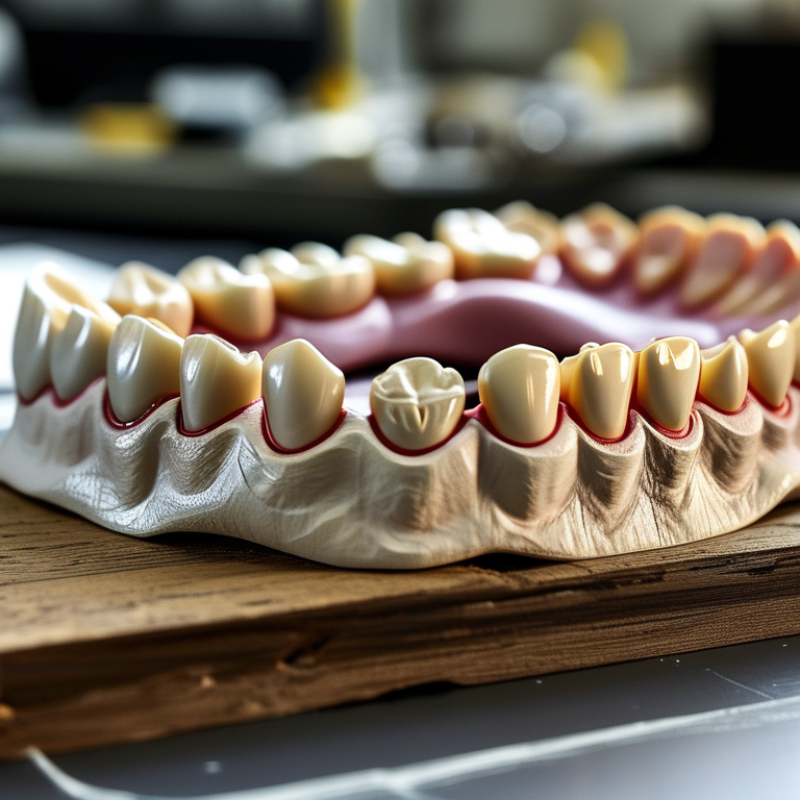
How to Choose a Precision Dental Manufacturing Supplier?

Understanding Precision Dental Manufacturing Requirements

Choosing a precision dental manufacturing supplier starts with defining the clinical and technical requirements clearly. The manufacturing process should match the restoration type, material, and intended use. Specify dimensional tolerances, surface-finish expectations, shade ranges, and delivery conditions before requesting quotations. Small errors compound.

Material selection requires careful attention. Confirm whether the supplier can process approved dental alloys, ceramics, polymers, or resin systems consistently. Ask for documentation covering material batches, lot numbers, and biocompatibility evidence. A precise part is not enough if its material history is unclear. In production reviews, traceability often reveals weaknesses that a visual inspection misses.

Quality control should include calibrated measuring equipment, documented inspection points, and clear acceptance criteria. Request sample reports showing fit, margins, contact areas, and surface quality.

Experienced engineers should explain how they manage scanning errors, tool wear, and design changes. Their answers should be specific, not polished but empty. It is also useful to review corrective-action records, since every operation has occasional deviations.

Perfect claims deserve questions. A dependable supplier admits limitations and explains how problems are contained, investigated, and prevented.

Communication matters too, especially when a digital file needs revision or a tolerance seems unrealistic. Before making a decision, compare technical evidence, response quality, and consistency across sample orders rather than relying on price alone.


Defining Supplier Capabilities and Product Quality Standards

How to Choose a Precision Dental Manufacturing Supplier?

Defining Supplier Capabilities and Product Quality Standards

Choosing a precision dental manufacturing supplier requires more than reviewing attractive product samples. A supplier should clearly explain its production capabilities, material controls, and inspection methods. Ask whether its equipment supports consistent milling, printing, finishing, and fitting requirements. The answer should include measurable details, not broad promises.

Request documented tolerances for margins, contacts, occlusion, and surface finish. These values should match your clinical needs and product specifications. Reliable suppliers maintain batch records, material certificates, operator training records, and inspection results.

Traceability matters when a remake or adjustment becomes necessary. It also reveals whether quality depends on one experienced technician.

A strong quality system includes process validation, calibrated measuring tools, and defined procedures for handling defects. Relevant quality certifications can support confidence, but certificates alone cannot prove daily consistency. Review sample inspection reports and ask how nonconforming work is investigated. No checklist is perfect. One overlooked handoff can affect the final fit. A careful supplier should welcome technical questions and provide realistic lead times. Be cautious when every answer sounds flawless. Manufacturing involves variation, and honest suppliers explain how they detect, correct, and prevent it. Small pilot orders can test communication, documentation, fit accuracy, and delivery reliability before larger commitments.

Evaluating Materials, Technology, and Production Processes

Choosing a precision dental manufacturing supplier requires more than comparing prices. Materials influence fit, strength, appearance, and long-term performance. Ask whether the supplier can provide verified material certificates, batch records, and clear technical data. Zirconia, titanium, cobalt-chromium, and PEEK each require different handling methods. A reliable supplier should explain these differences in practical terms.

Technology matters, but equipment alone proves little. Review the supplier’s scanning, CAD/CAM, milling, printing, and finishing capabilities. Check how they control tolerances at each stage. Inspection reports should show actual measurements, not general promises. Production processes also need traceability, from incoming materials to final packaging. Ask about calibration schedules, operator training, nonconformance handling, and revision control. Small gaps here can become costly remakes.

Tips: Request a sample workflow. Compare one case from design approval to final inspection. A polished sample can mislead. Test consistency across several batches, not just one impressive piece. I have found that communication is often the weak point, even when technical skills are strong. Confirm response times, change approval procedures, and documentation standards before placing regular orders. Some suppliers may offer advanced technology but lack disciplined process control. That is worth questioning. Choose the partner whose materials, technology, and production evidence remain dependable under routine pressure.

Assessing Certifications, Compliance, and Quality Control

A precision dental manufacturing supplier should be judged by evidence, not polished promises. A certificate is useful, but it does not prove every component meets your requirements. Check whether the quality system covers design control, production, inspection, and post-market feedback. Certifications such as ISO 13485 may support confidence, but their scope and validity deserve careful review. Ask for current certificates, audit dates, and the accredited body’s details.

Compliance should match the products and markets you serve. Request documented risk assessments, material declarations, and technical records. Confirm that the supplier can trace raw materials, operators, machines, and inspection results. In practice, a traceability test is revealing. Ask them to track one sample from incoming material to final shipment. Weak records become visible quickly.

Quality control must exist beyond final inspection. Review calibration logs, process validation, sampling plans, and nonconformance procedures. Visit the facility if possible. Observe how staff handle rejected parts and measurement errors. Small details matter, such as clean storage trays and readable batch labels. A perfect audit file can still hide inconsistent daily work. That is worth remembering. No supplier is flawless, and honest teams should explain their limits. They should also show corrective actions, trend data, and a clear response time when defects appear. Supplier evaluation is not a one-time form. Schedule periodic reviews and compare actual performance with promised controls.

How to Choose a Precision Dental Manufacturing Supplier? - Assessing Certifications, Compliance, and Quality Control

Assessment Dimension Relevant Requirement or Standard Recommended Acceptance Benchmark Evidence to Request Weight Risk Level
Quality management system ISO 13485:2016 for medical-device quality management Certificate is current, issued by an accredited certification body, and covers the relevant manufacturing scope and site Certificate, scope statement, issuing-body details, audit status, and expiry date 20% High
Regulatory compliance Applicable medical-device regulations in the target market; design and production controls appropriate to the product classification Supplier can identify applicable obligations and maintain documented procedures for regulatory changes Regulatory responsibility matrix, product classification rationale, compliance procedure, and recent audit findings 15% High
Risk management ISO 14971:2019 principles for identifying, evaluating, controlling, and monitoring product risks Documented risk analysis is linked to design inputs, process controls, inspection plans, and post-production feedback Risk-management plan, hazard analysis, control measures, residual-risk evaluation, and review records 10% High
Material control and traceability Documented incoming inspection, approved supplier controls, lot identification, and material traceability Each production lot can be traced from raw material and processing records to final shipment Material certificates, supplier-approval records, lot genealogy, incoming-inspection results, and storage controls 10% High
Dimensional inspection capability Inspection methods must be suitable for the drawing tolerances, geometry, and intended use Critical dimensions are measured with calibrated equipment and recorded against approved specifications Inspection equipment list, calibration certificates, measurement reports, sampling plans, and capability studies 15% Medium–High
Calibration and measurement system control Measurement equipment is identified, calibrated, protected, and suitable for its intended accuracy No critical instrument is past its calibration due date; out-of-tolerance impact assessments are documented Calibration register, certificates traceable to recognized standards, maintenance records, and MSA or GR&R results where applicable 10% Medium–High
Process validation Validation is expected when process output cannot be fully verified by subsequent inspection or testing Special processes have approved protocols, acceptance criteria, qualified parameters, and periodic revalidation triggers Validation protocols and reports for processes such as cleaning, bonding, heat treatment, or surface finishing 10% High
Cleanliness and contamination control Cleaning, handling, packaging, and environmental controls should match the product’s cleanliness and biocompatibility requirements Documented cleanliness limits, validated or verified cleaning methods, controlled handling, and defined packaging conditions Cleaning specifications, environmental-monitoring records, residue or particle-test results, and packaging-validation records 5% Medium–High
Nonconforming product and CAPA Nonconforming outputs must be identified, segregated, reviewed, and dispositioned; recurring issues require corrective action Root-cause analysis uses documented methods, actions have owners and due dates, and effectiveness is verified Redacted nonconformance and CAPA examples, defect trends, closure records, and effectiveness checks 10% High
Change control and document control Changes to drawings, materials, equipment, software, suppliers, or processes require documented review and approval Only current approved documents are available at points of use, and customer notification requirements are defined Engineering-change procedure, revision history, approval records, obsolete-document controls, and notification workflow 5% Medium–High
Supplier performance and audit readiness Performance should be monitored using objective quality, delivery, and responsiveness indicators Supplier supports technical audits, provides records promptly, and reports measurable improvement actions Anonymized KPI dashboard, on-time delivery trend, defect trend, audit responses, and escalation procedure 5% Medium
Total Evaluation Weight 100%
Suggested scoring rule: Rate each dimension from 0 to 5. Multiply the rating by the assigned weight. A supplier should normally achieve at least 80% overall, with no score below 3 for quality-system certification, regulatory compliance, risk management, traceability, or process validation.

Comparing Communication, Lead Times, Pricing, and Support

Choosing a precision dental manufacturing supplier requires more than comparing unit prices. Communication often reveals operational maturity before the first order. Ask how technical questions are documented, answered, and escalated. A reliable team should confirm materials, tolerances, file formats, and revision control in writing. Short replies feel efficient. They can also hide uncertainty. Request a sample timeline covering design review, machining, finishing, inspection, and dispatch.

Lead times should reflect real workflow, not an optimistic sales promise. Ask for standard and urgent schedules, including approval and remake handling. A five-day production window may exclude file corrections or inspection holds. That distinction matters when a clinic plans patient appointments. Review recent delivery records or anonymized performance data when available. One late shipment proves little, but repeated unexplained changes deserve attention. No supplier gets every estimate right. Early notice matters more than perfect forecasting.

Pricing should be compared line by line. Check setup fees, inspection costs, packaging, shipping, revisions, and remake policies. The lowest quote may become expensive after small additions. Support should continue beyond order placement. Ask whether a technical contact can review unclear margins, fit concerns, or surface-finish requirements before production. Strong support includes accessible records and corrective-action reports, not vague apologies. I have found response speed useful, but response quality matters more. A fast answer without measurable action remains weak. Record response times, promised dates, and actual outcomes during a trial order.